domingo, 9 de marzo de 2014

Some awesome places

BELFAST CASTLE

The original Belfast  Castle, built in the late twelve century by the Normans, was ocated in the town itself, flanked by the modern day High Street, Castle Place and Donegall Place in what is now Belfast city centre. This was the home os Sir Arthur Chichester, baron of Belfast, but was burned down in 1708, leaving only street names to mark the site. Rather than rebuild on the original site, the Chichester decided to build a new residence in the city suburbs, today´s Belfast Castle emerging as a result.


GIANT´S  CAUSEWAY


It is located in County Antrim on the northeast coast of Northern Ireland, about three miles (4.8 km) northeast of the town of Bushmills. It was declared a World Heritage Site by UNESCO in 1986, and a National Nature Reserve in 1987 by the Department of the Environment for Northern Ireland. In a 2005 poll of Radio Times readers, the Giant's Causeway was named as the fourth greatest natural wonder in the United Kingdom. The tops of the columns form stepping stones that lead from the cliff foot and disappear under the sea. Most of the columns are hexagonal, although there are also some with four, five, seven or eight sides. The tallest are about 12 metres (39 ft) high, and the solidified lava in the cliffs is 28 metres (92 ft) thick in places.


ACTORS FROM NORTHERN IRELAND

Liam Neeson Picture
LIAM NEESON

Born on June 7, 1952 in Ballymena, Northern Ireland, UK, Liam Neeson worked as a forklift operator for Guinness, truck driver, assistant architect and an amateur boxer. He had originally sought a career as a teacher by attending St Mary's Teaching College, Newcastle. However, in 1976, Neeson joined the Belfast Lyric Players' Theater and made his professional acting debut in the play "The Risen People". After two years, Neeson moved to Dublin's Abbey Theater where he performed the classics. It was here that he was spotted by director John Boorman and was cast in the film Excalibur (1981) as Sir Gawain, his first high-profile film role.
Throughout the 1980s Neeson appeared in a handful of films and UK TV series - including The Bounty (1984), A Woman of Substance (1984), La misión (1986), and Duet for One (1986) - but it wasn't until he moved to Hollywood to pursue larger roles that he began to get noticed. His turn as a mute homeless man in Suspect (1987) garnered good reviews, as did supporting parts in El precio de una pasión (1988) and El Hotel de los Fantasmas (1988) - though he also starred in the best-to-be-forgotten Satisfaction (1988), which also featured a then-unknown Julia Roberts - but leading man status eluded him until the cult favorite Darkman: El rostro de la venganza (1990), directed by Sam Raimi. From there Neeson starred in Under Suspicion (1991) and Ethan Frome (1993), was hailed for his performance in Woody Allen's Maridos y esposas (1992), and ultimately was picked by Steven Spielberg to play Oskar Schindler in La lista de Schindler (1993). The starring role in the Oscar-winning Holocaust film brought Neeson Academy Award, BAFTA and Golden Globe nominations for Best Actor.


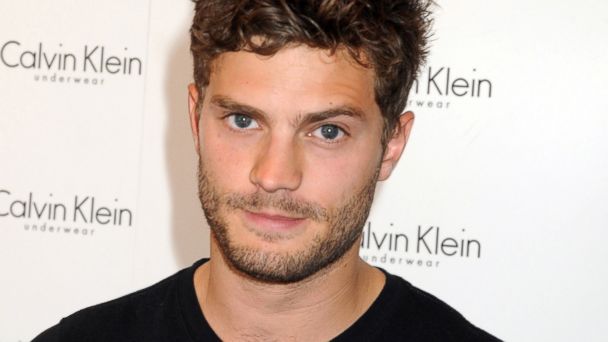
JAMIE DORNAN
James "Jamie" Dornan is a Northern Irish actor, model and musician. He played Axel von Fersen in Sofia Coppola's film Marie Antoinette, Sheriff Graham Humbert in the ABC series Once Upon a Time and serial killer Paul Spector in the BBC Two crime drama series The Fall. He is set to portray the titular character of Christian Grey in the feature film adaptation of the best-selling novel Fifty Shades of Grey.

In 2006, Dornan appeared in the Sofia Coppola film Marie Antoinette. He has modelled for Calvin Klein (with both Kate Moss and Eva Mendes), Dior, Aquascutum and Armani, among other brands. Dornan appeared in the drama film Shadows in the Sun in 2009, which starred three-time Academy Award nominee Jean Simmons. In 2008, he played the lead role of Ed in the Hammer Horror production Beyond the Rave.
In 2011, Dornan appeared in eight episodes of the ABC television series Once Upon A Time, playing the role of Sheriff Graham. While Graham from Storybrooke was killed by the town's mayor Regina (The Evil Queen) in the episode "The Heart Is a Lonely Hunter", Dornan stated that he would return as the Huntsman from the Enchanted Forest at some point and he remained a regular on the series. He returned as The Huntsman for the season finale episode, "A Land Without Magic".
Dornan stars alongside Gillian Anderson in the Northern Irish drama series The Fall, playing Paul Spector, a serial killer terrorising Belfast. In May 2013, show was renewed for a second series halfway through the broadcast of series one.


SAM NEILL was born in Northern Ireland, to army parents, a New Zealand-born father and an English-born mother. His family returned to the South Island of New Zealand in 1954. He went to boarding schools and then attended the universities at Canterbury and Victoria. He has a BA in English Literature. Following his graduation, he worked with the New Zealand Players and other theater groups. He also was a film director, editor and scriptwriter for the New Zealand National Film Unit for 6 years. His first feature film was Sleeping Dogs (1977). He then moved to Australia and his performance in My Brilliant Career (1979) was noticed in London by British actor James Mason who lobbied for Neill to get the lead role in La profecía III - El conflicto final (1981). Because of this, Neill moved to England where he also became famous as the title character in Reilly: Ace of Spies (1983). After his Great Britain stint, he moved back to Australia in the late 1980s. He now makes films all over the world. In 1993, he achieved "commercial and critical success" with Parque jurásico (1993) and El piano (1993).

LETS PLAY GAELIC FOOTBALL!!!!!!!!!


Traditional Dishes...6:

Traditional food is alive and well in Northern Ireland. In a historical sense, Northern Ireland's culinary heritage reflects our shared Ulster-Scots and Irish heritage and traditions. Most traditional dishes have their roots in potatoes and bread, the staple diet in bygone days and these staple ingredients are still evident in our cuisine. Traditionally the Ulster Fry was eaten for breakfast everyday, nowadays that pleasure is saved for the weekend, maybe indulging in a sausage soda or a bacon bap on a week day. However, no visit to Northern Ireland would be complete without experiencing an Ulster Fry and our Hotels, Guesthouses and Bed & Breakfast's serve up an Ulster Fry every day! ....


Some local specialities include:

Champ – a delicious comfort food dish of potatoes mashed with lots of butter, warm milk and chopped spring onions or, as we call them, scallions. We also love our spuds fried, roast, baked and simply boiled in their ‘jackets’ to be peeled ceremoniously at the table.

Irish Stew - a hearty casserole traditionally made with meat, potatoes, carrots and onions. The Ulster variety is made with steak pieces instead of lamb – cooked to a peppery slush and often served with thick slices of buttered bread.

Dulse – a salty, seaweed snack, originally harvested by fishermen to supplement their income when fishing was slack. Found at markets, and in some bars, it is also used in Robert Ditty’s sesame seed and dulse oatcakes, and in the Causeway Cheese Company’s cheese, and it can add a very pleasant saline edge to a loaf of soda bread.

Lough Neagh eel – traditionally eaten at Hallowe’en and served fried in chunks with a white onion sauce, also often smoked and served as a starter.

Potato bread farl – a dense, earthy flat bread, made with potatoes, flour, and buttermilk and cooked on a griddle. This bread is the heart of every Ulster Fry and a must-buy foodie souvenir.

Soda bread farl - first baked in 19th century Ireland when local peasants added baking soda to help the dough rise. The result is thick, chunky soft bread with fluffy consistency that is best served fried as part of the Ulster Fry, or toasted with a big dollop of butter. They are also the base for popular Paddy’s Pizzas.

Wheaten bread - a healthy brown bread made with whole wheat flour and delicious toasted with melted cheese or buttered and served with a big bowl of steaming broth.

Yellow man – a crunchy golden confectionery often confused with honeycomb, but similar in texture, sold at fairs and markets.

Vegetable roll – well actually its thick slices of a fatty meat from the trimmings of brisket and rib with seasoning of fresh vegetables, usually celery, leek, carrot and onion. It was traditionally part of an Ulster Fry but now more often served at lunch or dinner with mashed potato or champ, and mashed swede or turnip.

Steak & Guinness pies – Steak & Guinness pie is the pub grub of choice in most parts of Ulster. The meat is cooked first, and then a pie dish is lined with puff pastry, filled with the beef and then topped with the pastry. It differs from the UK pastry-topped pie, in that the pastry is both on top and underneath, the meat. Butchers sell a wide range of pies with fillings such as mince and onion or chicken and ham.

Ardglass potted herring – not to be confused with roll mops, this dish was created in the days when herrings were plentiful. Each family has its own secret variation, but often they are wrapped around onion, bay leaf and all-spice with a 50:50 mixture of malt vinegar and water, topped with breadcrumbs and baked.

Traditional butcher’s sausages – the fine-textured sausage typical in Northern Ireland is very distinct from continental styles, and each butcher has his own unique family recipe, usually made with natural casings and hand-linked. Beef sausages seem peculiar to the north of Ireland, although they are also found in Scotland.

Pasties – this comforting mixture of sausage meat, onions, mashed potato is shaped like a burger, and always spiced with loads and loads of black pepper. You can order them plain, battered (the chip shop favourite) or coated with golden breadcrumbs.

Boxty – predominately found in County Fermanagh, Boxty is a weighty, starchy potato cake made with 50:50 mix of cooked mashed potatoes and grated, strained, raw potato. The most common variety is boiled boxty, also known as hurley, a large round loaf which is boiled whole for several hours, allowed to rest and then sliced and fried, often with bacon.

Buttermilk – a by-product of churning butter on the farm, buttermilk is responsible for the distinctive flavour and texture of Northern Irish breads – soda farls, potato bread, pancakes and wheaten bread.

Interesting & Fun Facts About Northern Ireland !

From glorious Victorian architecture, spectacular scenery to its guerrilla warfare, Northern Irelandhas always been in news for a bevy of reasons. Tucked away in the northeastern fringes of Ireland, the historic island of North Ireland was formerly a part of the United Kingdom before ethno-political conflict initiated the need for a separate constitutional status for the land. Today, Northern Island rests as a separate country of the United Kingdom with six counties to its name. Northern Ireland has a devolved government although its legal jurisdiction stands distinct from that of England, Scotland and Wales. Initially known as the economic powerhouse of Ireland, North Ireland traditionally had an industrial economy before it was replaced by the service industry. Today, Northern Ireland has the smallest economy of its all other English counterparts. A nation torn between violent antagonism between Protestants and Catholics, between identity and disambiguation, today Northern Ireland has come to represent a little more than just its belligerent status. Surf through the following fun and interesting facts to explore more about this land.


  • Did you know that Northern Ireland, which is a part of the island of Ireland, is the smallest country in the United Kingdom?
  • The best-known delicacy of Northern Ireland is the ‘Ulster Fry’ that traditionally includes high cholesterol wonders like bacon, egg, soda bread, sausage, potato bread, mushrooms, fried tomato, baked beans and occasionally pudding.
  • Paul Rankin and Michael Deane are the world-famous chefs in Northern Ireland.
  • Northern Island is the home to many sports legends like late soccer legend George Best, Norman Whiteside, Darren Clarke, Alex Higgins, Dave McCauley, Tony McCoy and F1 racer Eddie Irvine.
  • Although English is the most popular language in Northern Ireland, Irish and Ulster Scots are still prevalent in several pockets of the region. Interestingly, Chinese is the most widely spoken minority language in Northern Ireland!
  • Northern Ireland is the proud bearer of many internationally renowned poets and writers like C.S Lewis, Ian McDonald, Tom Paulin, Bob Shaw, Frank Ormsby, John Brown and many more.
  • “God Save The Queen” is the national anthem of Northern Ireland.
  • Northern Ireland is divided into six counties—Antrim, Armagh, Derry/Londonderry, Tyrone, Fermanagh, and Down.
  • Did you know that the unfortunate ship ‘Titanic’ was built and launched from Belfast Harbor in Northern Ireland?
  • Northern Ireland is the second most thinly populated country of the UK after Scotland.
  • Northern Ireland, which was once the industrial powerhouse of Ireland, is apparently the poorest regions in UK today and is the smallest of the four economies.
  • The majority of people in Northern Ireland are Protestant.
  • Northern Ireland's capital city Belfast is a vibrant tourist attraction bustling with stylish bars, pubs, bistros, hotels and historical attractions.
  • Almost 46% of the total population of Northern Ireland is under 30 years old.
  • The Pound sterling is the currency of Northern Ireland.
  • Dunluce Castle, Giant's Causeway, Belfast City Hall, The Marble Arch Caves, Carrickfergus Castle, Samson and Goliath are some of the popular tourist destinations in Northern Ireland.
  • Were you aware that a sheet of ice covered Northern Ireland for the most of the last ice age?
  • Belfast Giants, Gaelic football, Hurling, Gaelic handball, Ulster Rugby are some of the most popular sport of Northern Irealnd.
  • The Northern Ireland Flag comprises of red, white and blue colors.
  • Lough Neagh in Northern Ireland is the largest fresh water lake in Europe.
  • Did you know that the Potato is called as ‘Prutties’ in Northern Ireland and a child is called as ‘Wean’? Can you guess what North Ireland is called in Belfast accent? Well, Norn Iron is the answer.